
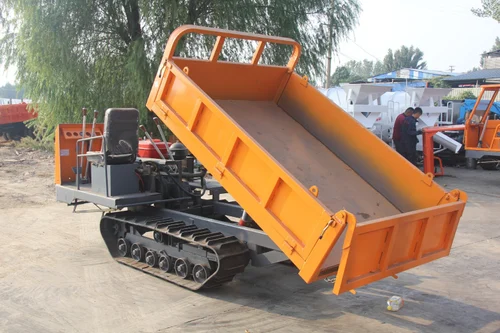


Safety is a critical aspect of construction equipment operation, especially when working with compact machines on uneven, unstable, or confined job sites. Proper safety practices not only protect operators but also improve overall productivity by reducing accidents, equipment damage, and downtime.
A crawler dumper truck is designed to handle challenging terrain and heavy material transport, but safe operation depends on correct usage, awareness of site conditions, and adherence to standard operating procedures. Understanding these safety practices is essential for ensuring efficient and risk-free performance in real-world applications.
Importance of Pre-Operation Inspection
Before starting any work, a thorough inspection of the machine is essential. This helps identify potential issues that could lead to operational failure or safety hazards during use.
Key inspection points include:
- Checking track condition and tension
- Inspecting hydraulic hoses for leaks or damage
- Verifying engine oil and fuel levels
- Testing control systems and brakes
- Ensuring safety alarms and indicators are functional
Regular pre-operation checks help prevent unexpected breakdowns and ensure smooth performance.
Safe Loading and Weight Management
Proper loading practices are essential for maintaining stability and preventing accidents. Overloading or uneven loading can significantly affect machine balance, especially on sloped or uneven ground.
F=m×g
This equation highlights how weight (mass × gravity) directly impacts the force exerted on the machine, which is crucial for understanding load limits and stability.
Safe loading guidelines include:
- Never exceeding the manufacturer’s rated capacity
- Distributing materials evenly in the dump bed
- Securing loose materials before movement
- Avoiding sudden load shifts during operation
Proper weight management ensures safer and more efficient operation.
Operating on Slopes and Uneven Terrain
Crawler dumper trucks are often used in challenging environments, including slopes and uneven surfaces. While they are designed for such conditions, proper technique is essential to maintain safety.
Important practices include:
- Moving straight up or down slopes instead of diagonally
- Avoiding sudden acceleration or braking
- Keeping loads low and balanced during movement
- Assessing ground stability before operation
These precautions help reduce the risk of tipping or loss of control.
Safe Driving and Speed Control
Maintaining appropriate speed is essential when operating heavy machinery. Excessive speed can lead to instability, especially on rough or unpredictable terrain.
Operators should:
- Drive at controlled speeds based on terrain conditions
- Slow down when turning or changing direction
- Avoid sudden movements or sharp turns
- Maintain awareness of surroundings at all times
Controlled driving improves both safety and machine longevity.
Importance of Operator Training
Proper training is one of the most important factors in safe equipment operation. Skilled operators are better equipped to handle unexpected situations and operate machinery efficiently.
Training should cover:
- Basic machine controls and functions
- Emergency shutdown procedures
- Safe loading and unloading techniques
- Terrain assessment and navigation skills
Well-trained operators significantly reduce the risk of accidents and equipment misuse.
Hydraulic System Safety Considerations
The hydraulic system is a powerful component that must be handled carefully. Improper use or maintenance can lead to serious safety risks.
Key safety measures include:
- Avoiding direct contact with hydraulic leaks
- Regularly inspecting hoses and seals
- Ensuring system pressure is within safe limits
- Performing maintenance only when the system is depressurized
Proper hydraulic safety ensures stable and reliable machine performance.
Emergency Procedures and Risk Management
Even with proper precautions, unexpected situations can occur. Having clear emergency procedures in place is essential for minimizing risks.
Recommended practices include:
- Knowing the location of emergency stop controls
- Training operators in shutdown procedures
- Keeping communication tools available on-site
- Establishing clear site safety protocols
Preparedness helps reduce the impact of potential hazards.
Conclusion
Operating construction equipment safely requires a combination of proper training, routine inspections, and responsible usage practices. A crawler dumper truck is designed to perform in demanding environments, but its safe operation depends heavily on operator awareness and adherence to guidelines.
By following correct loading procedures, maintaining controlled driving practices, and ensuring regular maintenance, operators can significantly reduce risks and improve efficiency. These safety practices are essential for achieving reliable performance and maintaining a secure working environment on construction sites.