
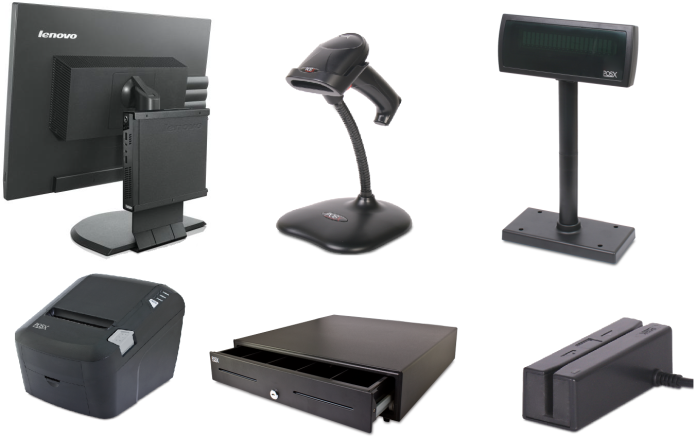


In modern retail and hospitality operations, the efficiency of a point-of-sale (POS) system is highly dependent on the reliability of its peripherals. POS peripherals are hardware components such as barcode scanners, receipt printers, payment terminals, cash drawers, and customer-facing displays that facilitate seamless transactions, inventory management, and customer interactions. Evaluating their reliability is crucial for ensuring smooth operations, minimizing downtime, and maintaining a high level of customer satisfaction.
Importance of Reliable POS Peripherals
Reliable POS peripherals reduce the risk of transaction errors, prevent operational delays, and enhance the overall customer experience. Choosing high-quality devices minimizes the need for frequent repairs or replacements, saving both time and money for businesses. Additionally, dependable peripherals ensure that sales, inventory, and customer data are accurately captured and updated in real time.
Professional POS Peripherals providers offer devices designed to withstand heavy usage, integrate seamlessly with POS software, and maintain consistent performance even in high-traffic environments. Understanding the factors that influence reliability helps businesses select the right peripherals for their specific operational needs.
Factors Affecting Peripheral Reliability
Build Quality and Materials
The construction and materials used in POS peripherals significantly impact their durability. Devices made from industrial-grade plastics or metals are more resistant to wear and tear, drops, and environmental stress. For example, a receipt printer with reinforced internal mechanisms or a barcode scanner with a protected lens will typically last longer than lower-quality alternatives.
Frequency and Intensity of Use
High-volume operations place greater demands on POS peripherals. A restaurant with hundreds of daily transactions or a retail store with constant product scanning requires hardware that can handle repeated use without performance degradation. Peripherals designed for heavy-duty use, often labeled as “commercial grade,” are ideal for such environments.
Maintenance and Care
Proper maintenance is essential for ensuring long-term reliability. Regular cleaning of barcode scanners, timely replacement of printer paper or thermal rolls, and careful handling of cash drawers and payment terminals all contribute to device longevity. Following manufacturer guidelines and performing periodic inspections can prevent minor issues from escalating into major failures.
Software and Firmware Compatibility
Reliability also depends on the integration of POS peripherals with the underlying software. Devices that are regularly updated with compatible firmware and software patches are less likely to experience errors or connectivity issues. Ensuring that peripherals support current POS software versions and payment protocols is critical for uninterrupted operations.
Evaluating Common POS Peripherals
Barcode Scanners
Barcode scanners are fundamental for accurate product identification and inventory tracking. Their reliability can be measured by scanning speed, accuracy, and tolerance to environmental factors such as dust or lighting conditions. Scanners with advanced sensors and durable housings perform consistently in both high-traffic retail stores and warehouses.
Receipt Printers
Receipt printers must operate continuously, especially in busy retail and foodservice environments. Reliability is influenced by print speed, paper handling mechanisms, and resistance to jams or smudging. Thermal printers are often preferred for their low maintenance requirements and high-speed performance, while dot-matrix printers may be suitable for multi-part receipts in specific industries.
Payment Terminals
Payment terminals are central to secure transactions. Reliable terminals support EMV chip cards, contactless payments, and mobile wallets without interruptions. Durability, software compatibility, and compliance with security standards such as PCI DSS are key factors in evaluating their reliability.
Cash Drawers
Cash drawers must function accurately for each transaction, opening and closing without jams or malfunctions. Reliability depends on mechanical quality, robust locking mechanisms, and proper installation. Frequent maintenance ensures smooth operation and minimizes downtime.
Customer-Facing Displays
Customer-facing displays enhance transparency and engagement during transactions. Reliable displays provide clear, real-time information without lag or freezing. Touchscreen models should maintain responsiveness over extended use, even under frequent interaction.
Testing and Performance Assessment
Businesses can evaluate the reliability of POS peripherals through both lab testing and real-world performance assessment. Stress tests, continuous operation trials, and simulated high-traffic scenarios help determine how devices hold up under sustained use. Additionally, monitoring error rates, connectivity consistency, and maintenance frequency provides practical insights into long-term reliability.
Conclusion
Evaluating the reliability of POS Peripherals is a critical step in selecting hardware that supports efficient, accurate, and secure point-of-sale operations. Factors such as build quality, frequency of use, maintenance practices, software compatibility, and environmental resilience all influence device performance and longevity.
By carefully assessing each peripheral type—including barcode scanners, receipt printers, payment terminals, cash drawers, and customer-facing displays—businesses can make informed decisions that reduce downtime, improve operational efficiency, and enhance the overall customer experience. Investing in reliable, high-quality peripherals not only ensures smooth day-to-day operations but also strengthens the long-term scalability and effectiveness of the POS system.