
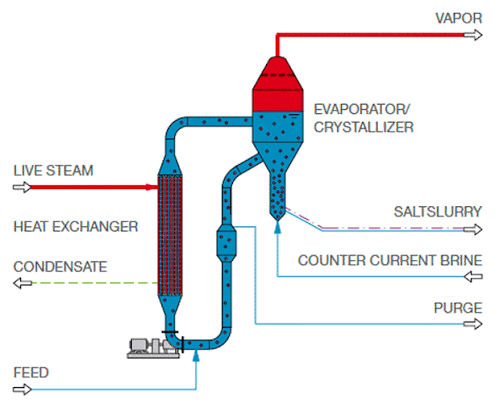


Crystallization is a highly controlled industrial process used to separate and purify materials in chemical, pharmaceutical, food, and mineral industries. While a crystallizer tank is designed to ensure stable and efficient crystal formation, real-world operation often presents several challenges that can affect product quality and production efficiency.
A well-maintained crystallizer tank can perform reliably under varying conditions, but issues such as scaling, poor crystal size distribution, and unstable operating parameters must be managed carefully to maintain consistent results.
Uncontrolled Crystal Size Distribution
One of the most common challenges is inconsistent crystal size. This occurs when nucleation and crystal growth are not properly balanced.
Causes
- Rapid changes in temperature
- Excessive supersaturation
- Poor mixing or agitation
- Inconsistent feed rate
Solutions
- Maintain stable temperature control
- Optimize agitation speed
- Control feed concentration carefully
- Use gradual cooling or evaporation strategies
Proper balance between nucleation and growth ensures uniform crystal formation.
Scaling and Fouling Inside the Tank
Scaling occurs when unwanted crystal deposits build up on the tank walls or internal components. This reduces heat transfer efficiency and can disrupt the crystallization process.
Causes
- High supersaturation levels
- Poor flow distribution
- Inadequate cleaning schedules
- Localized temperature differences
Solutions
- Improve circulation and mixing
- Maintain controlled supersaturation
- Use anti-fouling design features
- Implement regular cleaning and maintenance schedules
Preventing buildup is more effective than removing it after formation.
Temperature Control Instability
Temperature fluctuations can significantly impact crystal quality, leading to irregular growth patterns and product inconsistency.
Causes
- Faulty sensors or controllers
- Inefficient cooling or heating systems
- Delayed feedback response
- External environmental variations
Solutions
- Use precise automated temperature control systems
- Regularly calibrate sensors
- Improve insulation of the tank
- Optimize heat exchange systems
Stable temperature control is essential for predictable crystallization behavior.
Poor Mixing Efficiency
Inadequate mixing can lead to uneven concentration distribution and inconsistent crystal growth.
Causes
- Incorrect impeller design
- Low agitation speed
- Mechanical wear of mixing components
- High slurry viscosity
Solutions
- Select appropriate impeller type for the material
- Adjust agitation speed based on process needs
- Perform routine maintenance on agitators
- Improve flow design to reduce dead zones
Efficient mixing ensures uniform conditions throughout the tank.
Blockages in Feed or Discharge Lines
Blockages can disrupt continuous operation and reduce production efficiency.
Causes
- Large crystal agglomerates
- High slurry concentration
- Improper pipe sizing
- Lack of filtration in feed lines
Solutions
- Install proper filters or strainers
- Optimize crystal size control
- Regularly inspect pipelines
- Use anti-clogging design systems
Preventive maintenance reduces unexpected downtime.
Low Product Yield
Low yield means that less solid product is recovered from the solution than expected.
Causes
- Incomplete crystallization
- Excessive crystal breakage
- Poor residence time control
- Inefficient separation process
Solutions
- Optimize residence time inside the tank
- Improve separation and filtration systems
- Control agitation to avoid crystal damage
- Maintain stable process conditions
Improving yield directly enhances production efficiency.
Energy Consumption Issues
High energy usage is a common concern in large-scale crystallization operations.
Causes
- Inefficient heat transfer systems
- Poor insulation
- Unoptimized process cycles
- Excessive cooling or heating demand
Solutions
- Use energy-efficient heat exchangers
- Improve tank insulation
- Automate process control systems
- Optimize operating cycles
Energy-efficient operation reduces long-term production costs.
Maintenance Downtime
Frequent breakdowns or maintenance interruptions can reduce overall productivity.
Causes
- Lack of preventive maintenance
- Wear and tear of mechanical components
- Corrosion or scaling damage
- Poor operational practices
Solutions
- Implement scheduled maintenance programs
- Use corrosion-resistant materials
- Monitor equipment condition regularly
- Train operators for proper handling
Preventive maintenance ensures long-term reliability.
Conclusion
Operating a crystallizer tank efficiently requires careful management of multiple factors including temperature control, mixing efficiency, scaling prevention, and process stability. While challenges such as crystal size inconsistency, fouling, and energy inefficiency are common, they can be effectively controlled through proper design, monitoring, and maintenance practices. With the right operational strategies, industries can ensure consistent crystal quality, improved yield, and long-term equipment performance.