
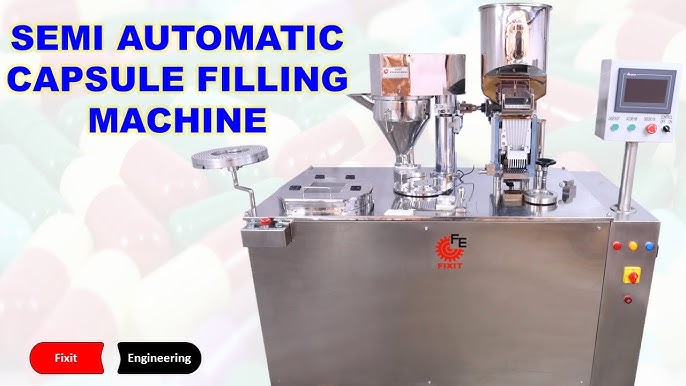


Capsule filling is a critical step in pharmaceutical, nutraceutical, and herbal product manufacturing. The method used for filling directly affects product quality, production speed, and cost efficiency. Traditionally, manual capsule filling has been widely used in small-scale operations, but with growing demand for accuracy and consistency, more manufacturers are shifting toward semi-automated solutions.
In modern production environments, efficiency and precision are essential for maintaining competitiveness. A semi automatic capsule filling machine offers a practical alternative to manual methods by combining controlled automation with operator supervision. This allows manufacturers to improve output quality while still retaining flexibility in production. Understanding the differences between manual and semi-automatic systems helps businesses choose the right solution based on their scale and requirements.
Understanding Manual Capsule Filling Methods
Manual capsule filling is the most basic method of producing filled capsules. It is commonly used in laboratories, small pharmacies, and early-stage formulation testing. In this method, operators manually separate capsule bodies and caps, fill the powder using simple tools, and then close each capsule individually.
Although this approach is cost-effective and requires minimal equipment, it has several limitations:
- Time-consuming production process
- High dependency on operator skill
- Inconsistent capsule weight and dosage
- Limited scalability for large batches
- Increased risk of contamination due to manual handling
Manual filling is suitable only for very small-scale production or experimental formulations where precision and speed are not major concerns.
What Changes with Semi Automatic Capsule Filling Machines?
Semi-automatic systems introduce a significant improvement over manual processes. Instead of relying entirely on human effort, the machine automates key steps such as capsule separation, powder dosing, and filling accuracy, while still allowing operator involvement in loading and monitoring.
This hybrid approach ensures better consistency and faster production compared to manual methods, without requiring the high investment of fully automatic machines.
Key Differences Between Manual and Semi Automatic Methods
The differences between manual capsule filling and semi-automatic systems can be clearly understood by comparing their performance in key areas:
1. Production Speed
Manual filling is slow because each capsule is handled individually. Operators must repeat the same steps continuously, which limits output.
Semi-automatic systems significantly increase production speed by automating repetitive tasks like dosing and capsule alignment.
2. Accuracy and Dosage Consistency
Manual methods often result in uneven filling due to human error and lack of precise measurement tools. This can lead to dosage variations.
Semi-automatic machines use controlled dosing systems that ensure uniform capsule weight, improving product reliability and quality.
3. Labor Requirements
Manual filling requires a large amount of labor for even small batches. This increases operational effort and fatigue.
Semi-automatic machines reduce labor dependency, allowing a single operator to manage a much larger production volume.
4. Hygiene and Contamination Control
Manual handling increases the risk of contamination since capsules and raw materials are frequently touched.
Semi-automatic systems minimize direct contact, improving hygiene standards and meeting stricter regulatory requirements.
5. Scalability
Manual methods are not suitable for scaling up production due to time and labor limitations.
Semi-automatic machines offer better scalability, making them suitable for small to medium production facilities.
Advantages of Semi Automatic Capsule Filling Machines
Semi-automatic machines bring several operational advantages that make them ideal for growing manufacturing units:
- Improved efficiency compared to manual processes
- Consistent dosing and filling accuracy
- Reduced operational fatigue for workers
- Flexibility for different capsule sizes and formulations
- Lower long-term production costs
These benefits make semi-automatic systems a practical upgrade for manufacturers transitioning from manual production.
When Manual Methods Are Still Useful
Despite their limitations, manual capsule filling methods still have relevance in certain scenarios. They are particularly useful in:
- Research and development laboratories
- Small-scale personalized medicine production
- Testing and formulation trials
- Low-budget startup operations
In these cases, production volume is low, and flexibility is more important than speed or automation.
Choosing the Right Method for Production
The choice between manual and semi-automatic methods depends on production goals, budget, and scale. Manual filling may be sufficient for experimental or very small operations, but it becomes inefficient as demand increases.
Semi-automatic systems provide a balanced solution by offering improved speed, better accuracy, and controlled automation without the complexity of fully automated machines. This makes them suitable for businesses looking to scale gradually while maintaining product quality.
Conclusion
Manual capsule filling methods have long served as the foundation of small-scale pharmaceutical production, offering simplicity and low initial cost. However, they fall short in terms of speed, accuracy, and scalability. Semi-automatic systems bridge this gap by introducing automation where it matters most, while still allowing operator control.
The semi automatic capsule filling machine stands out as a practical upgrade for manufacturers seeking improved efficiency and consistent product quality. By understanding the differences between these two methods, businesses can make informed decisions that align with their production needs and long-term growth plans.