


In today’s fast-paced logistics and warehouse environments, operational productivity is a critical measure of success. Distribution centers and shipping facilities face constant pressure to process larger volumes of goods quickly, efficiently, and safely. Traditional manual handling methods often slow down operations, increase labor costs, and lead to errors or injuries. As a result, businesses are increasingly turning to automated material-handling solutions to enhance workflow efficiency. Among these solutions, telescopic conveyors have emerged as a highly effective tool for improving productivity in warehouses and loading docks.
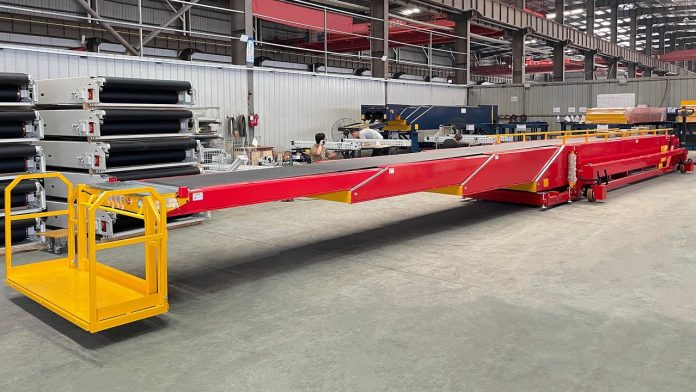
A telescopic conveyor is an extendable conveyor system that allows goods to move directly from the warehouse floor into trucks, trailers, or storage areas. Unlike fixed conveyors, telescopic systems can retract when not in use, saving space, and extend to reach deep into vehicles, ensuring smooth package transfer. By streamlining material flow, these conveyors help facilities reduce loading and unloading times, minimize manual labor, and maintain continuous operations.
Faster Loading and Unloading
One of the most significant ways telescopic conveyors boost productivity is by accelerating loading and unloading processes. Traditional manual methods require employees to lift, carry, and position packages repeatedly, which is time-consuming and physically demanding. Even fixed conveyor systems may not reach deep into trucks, requiring additional handling steps.
Telescopic conveyors extend directly into transport vehicles, allowing packages to move continuously from the warehouse to the truck bed. This direct transfer reduces delays, minimizes handling errors, and enables faster turnaround times for vehicles at loading docks. As a result, distribution centers can handle higher shipment volumes without expanding labor resources.
Reduced Labor and Worker Fatigue
Manual handling of packages is a common source of fatigue and inefficiency in warehouse operations. Repetitive lifting and carrying not only slow down the workflow but also increase the risk of injuries such as strains, sprains, and back problems.
Telescopic conveyors reduce the physical demands on workers by automating the movement of goods. Employees no longer need to carry items over long distances and can focus on sorting, scanning, or organizing packages. This reduction in manual labor improves overall productivity while promoting employee safety and job satisfaction.
Space Optimization
Efficient use of space is essential in busy warehouses and distribution centers. Fixed conveyor systems and manual handling areas often occupy valuable floor space, limiting movement and operational flexibility.
Telescopic conveyors are designed to retract into a compact position when not in use, freeing up dock areas for other equipment and activities. This retractable design allows facilities to maintain organized, clutter-free spaces while adapting to different shipment volumes and dock configurations. Better space utilization contributes to smoother workflow and faster operations, further enhancing productivity.
Enhanced Accuracy and Reduced Errors
Operational productivity is not only about speed but also about accuracy. Misplaced packages, misrouted shipments, or damaged goods can lead to delays, customer dissatisfaction, and increased costs.
Telescopic conveyors support accurate handling by providing a controlled, consistent flow of packages from the warehouse to transport vehicles. Automated belt systems reduce human error, ensuring that items are delivered to the correct location without unnecessary handling. This improved accuracy saves time otherwise spent on rework and enhances overall operational efficiency.
Versatility for Various Package Types
Distribution centers handle packages of different sizes, weights, and shapes. Telescopic conveyors are versatile enough to manage a wide variety of goods, including cartons, parcels, bags, and other packaged items. Adjustable height and extension settings allow the conveyor to align with diverse truck or trailer configurations.
This adaptability ensures that warehouses can maintain a steady flow of packages regardless of shipment type or volume. By reducing bottlenecks caused by varying package sizes, telescopic conveyors contribute to more predictable and productive operations.
Integration With Automation Systems
Modern telescopic conveyors often integrate seamlessly with warehouse management systems (WMS) and other automated solutions. Sensors, motorized controls, and real-time monitoring allow operations to adjust belt speed, detect jams, and optimize loading sequences automatically.
Such integration improves workflow coordination and ensures that packages move efficiently through the facility. Automation also enables predictive maintenance, reducing downtime caused by unexpected mechanical issues. A well-maintained and intelligently controlled conveyor system maximizes uptime and keeps operational productivity consistently high.
Long-Term Cost Efficiency
Although the initial investment in telescopic conveyors may be higher than manual handling solutions, the long-term benefits are substantial. Faster loading and unloading, reduced labor requirements, and fewer errors translate into cost savings and increased throughput.
By streamlining operations, warehouses can process more shipments without significantly increasing staff levels. Over time, these efficiency gains result in a favorable return on investment while supporting the scalability of distribution operations.
Conclusion
Telescopic conveyors are a transformative solution for distribution centers and warehouses looking to increase operational productivity. By reducing manual labor, optimizing space, improving accuracy, and accelerating loading and unloading processes, these systems help facilities achieve higher efficiency and faster turnaround times.
As supply chain demands continue to grow, adopting telescopic conveyors allows businesses to maintain competitive operations, enhance worker safety, and ensure reliable, high-volume material handling. These systems not only improve day-to-day productivity but also provide long-term value for modern logistics environments.